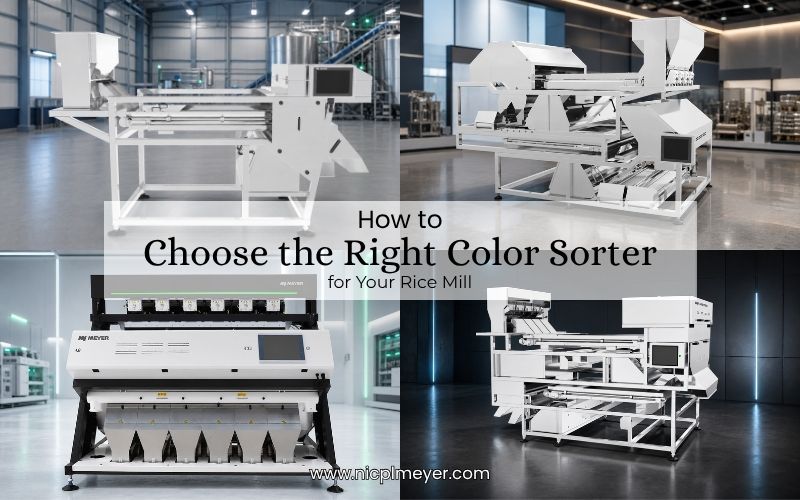
Choosing the right sortex machine for your rice mill can make or break your profit margin. A wrong-sized sorter either wastes capacity or bottlenecks your entire mill. This guide walks you through Meyer color sorter models, capacity sizing (TPH), chute vs belt types, price range in India, and a 10-point checklist before you buy.
What is a Sortex Machine (Color Sorter)?
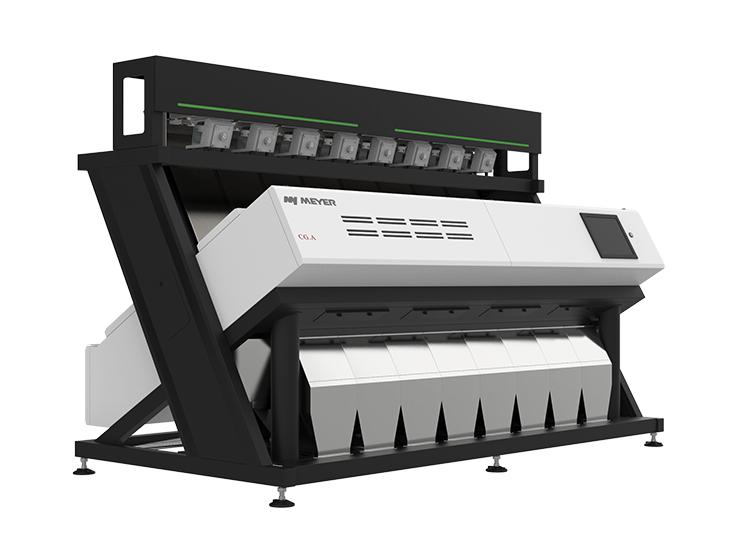
A sortex machine — also called a color sorter or optical sorter — is a machine that scans rice grains at high speed using cameras and AI, then removes discolored, broken, chalky, black-tip, damaged, or foreign grains (stones, glass, plastic, paddy husk) using air-jet ejectors.
"Sortex" is technically a brand name (owned by Bühler), but in India every rice miller uses the word to mean any color sorter machine — Meyer, Bühler, Fowler Westrup, or otherwise.
Why Every Rice Mill in India Needs a Sortex
Export-grade purity — buyers in the Middle East, Europe, and US reject shipments with even 0.5% discolored grains.
Higher price per kg — sorted rice fetches ₹5–15/kg more than unsorted.
Less manual labour — one sortex replaces 8–12 workers doing hand-picking.
Basmati and premium rice — chalky, yellow, and immature grains must be removed for premium branding.
Chute Type vs Belt Type — Which One Do You Need?
Chute-type sortex is the standard choice for rice, dal, wheat, and other free-flowing grains. Grains slide down a chute, get scanned mid-air, and rejected grains are blown out. High throughput, lower price.
Belt-type sortex is used for fragile, oily, or irregular products — cashew, peanut, raisins, dry fruits, frozen vegetables. Grains travel on a moving belt so they don't break. Higher price, gentler handling.
For a rice mill: always go chute-type. Belt is only needed if you also process nuts or dry fruits.
How to Size Your Sortex by Rice Mill Capacity (TPH)
The rule of thumb: your sortex capacity should match your milling output, not paddy input. A 4 TPH paddy mill produces about 2.4 TPH of rice after husking and polishing — so you need a 2.5–3 TPH sortex, not a 4 TPH one.
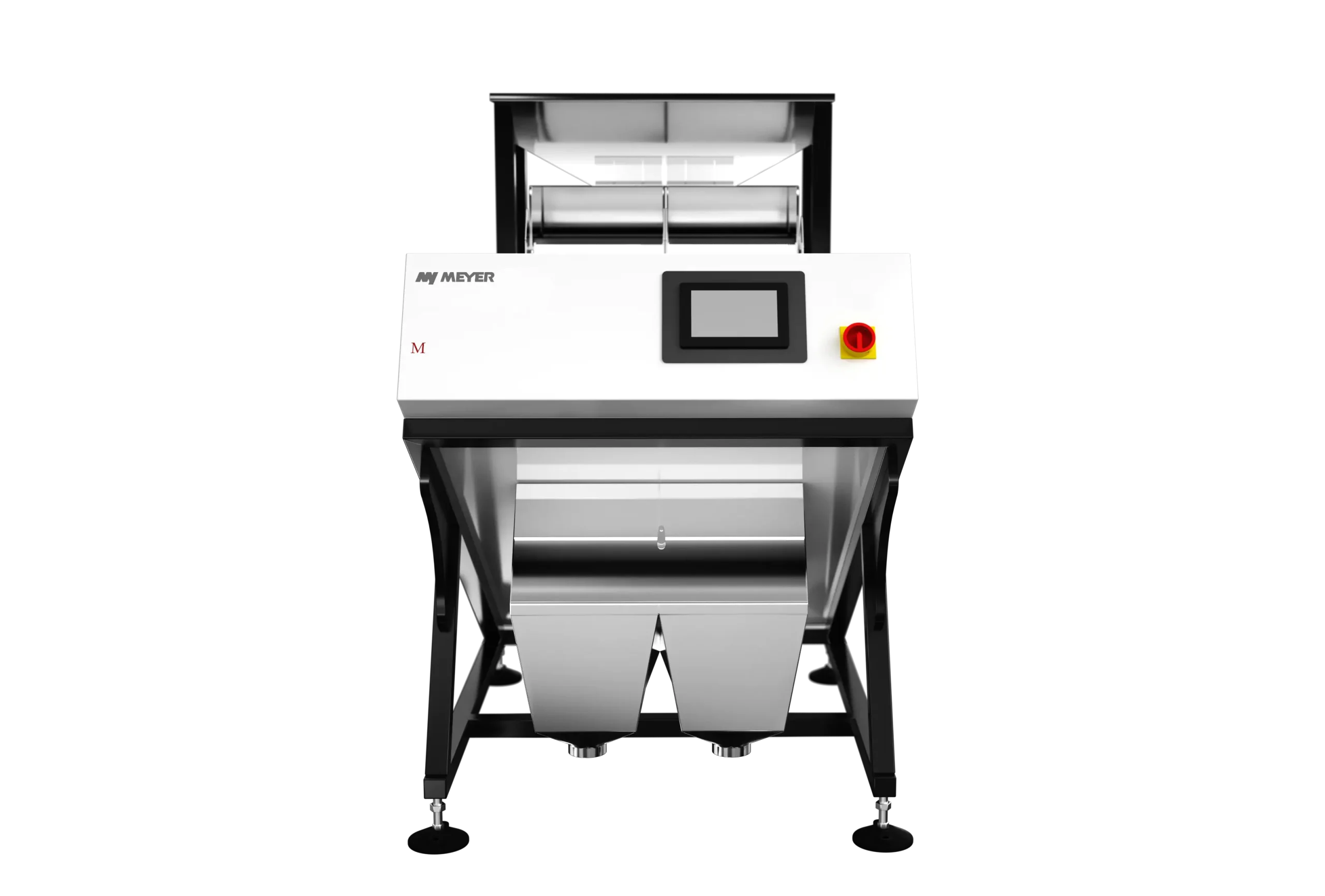
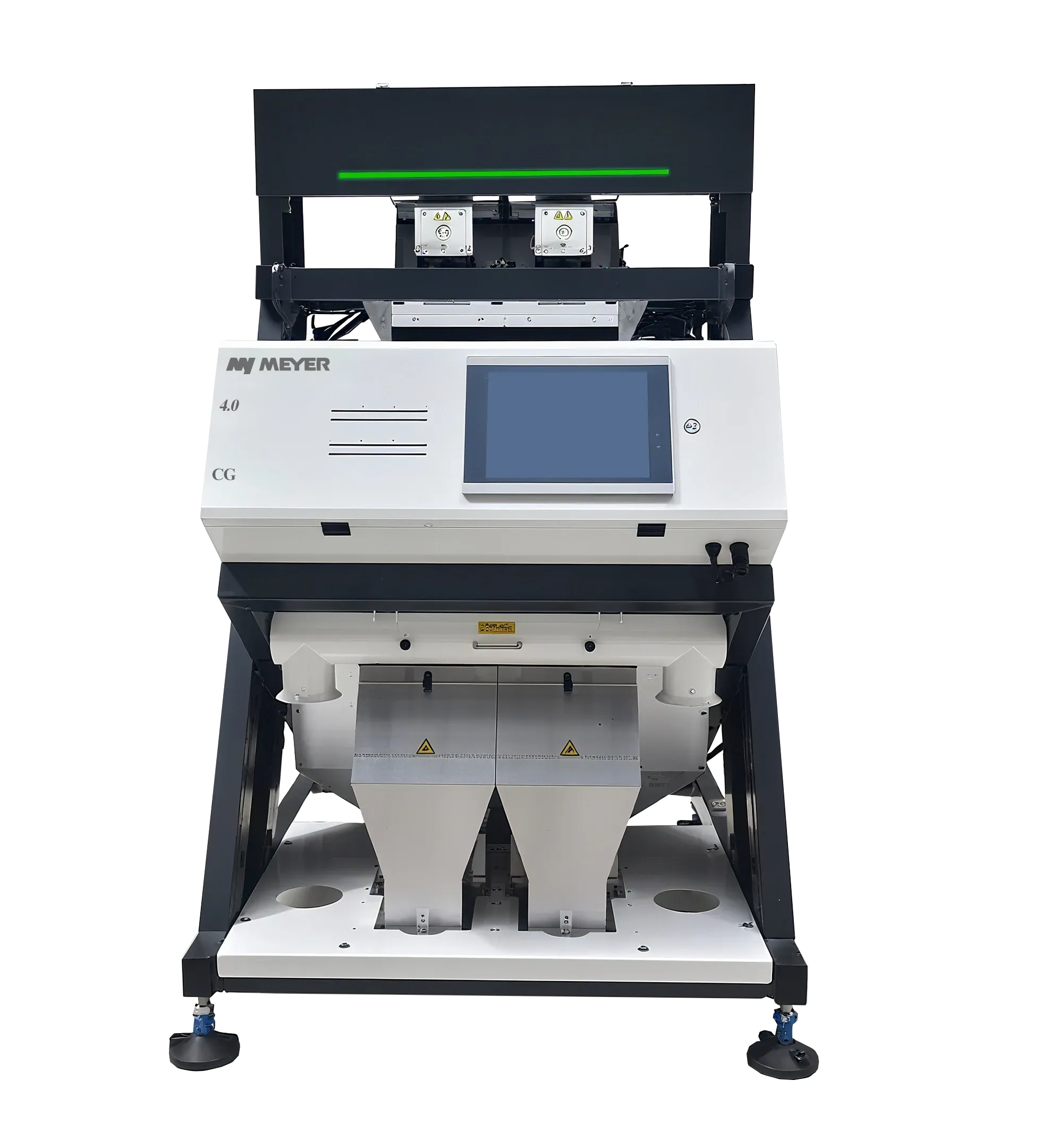
The Meyer M-Series is a compact 2-chute optical sorter designed for small rice mills, cereal cleaners, and pulse processors. It handles cereals, pulses, nuts, oilseeds, and dried fruits with up to 99.99% sorting purity. Space-saving footprint makes it ideal where floor space is tight.
Best for: mills doing under 1.5 TPH of rice output. Entry-level pricing.
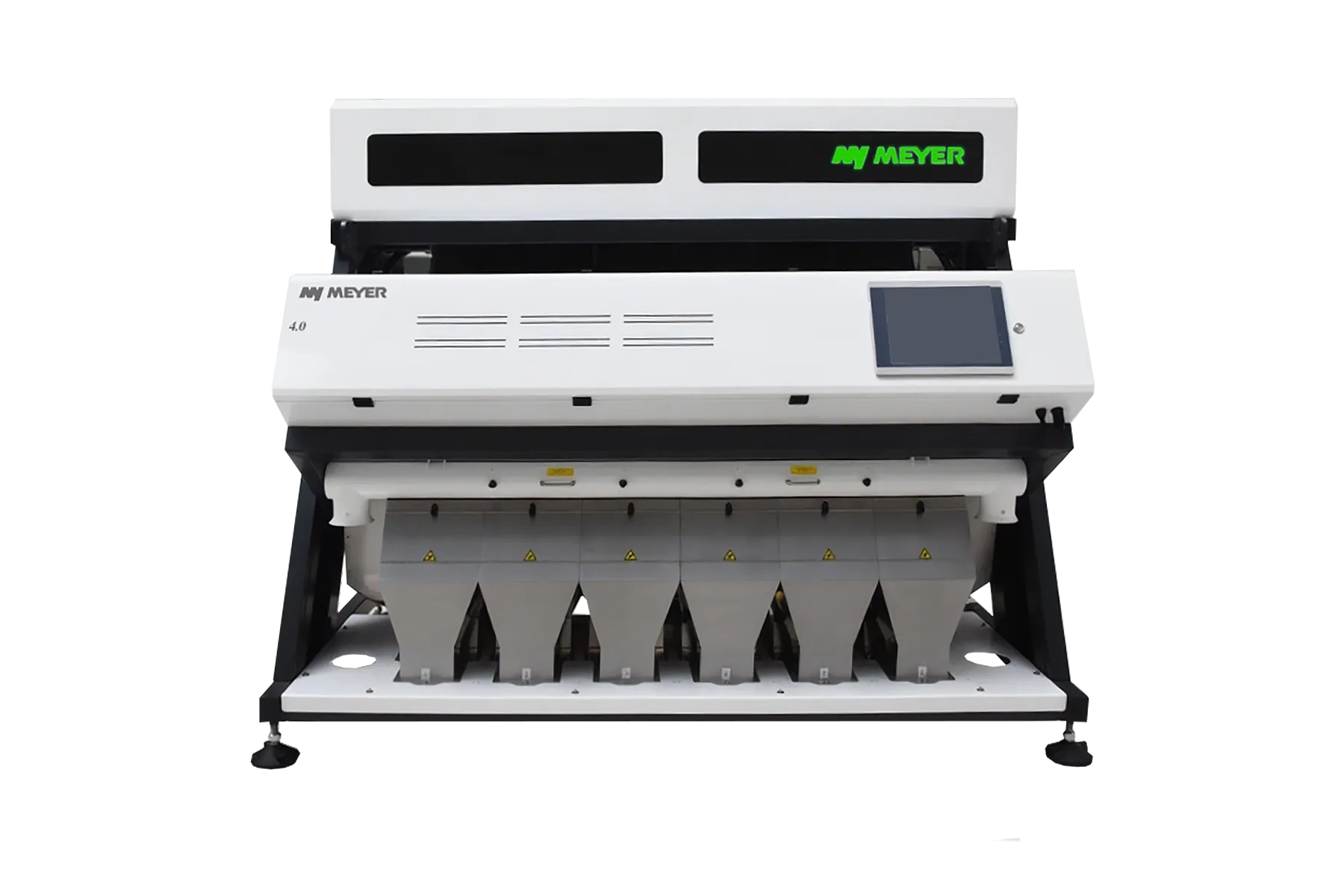
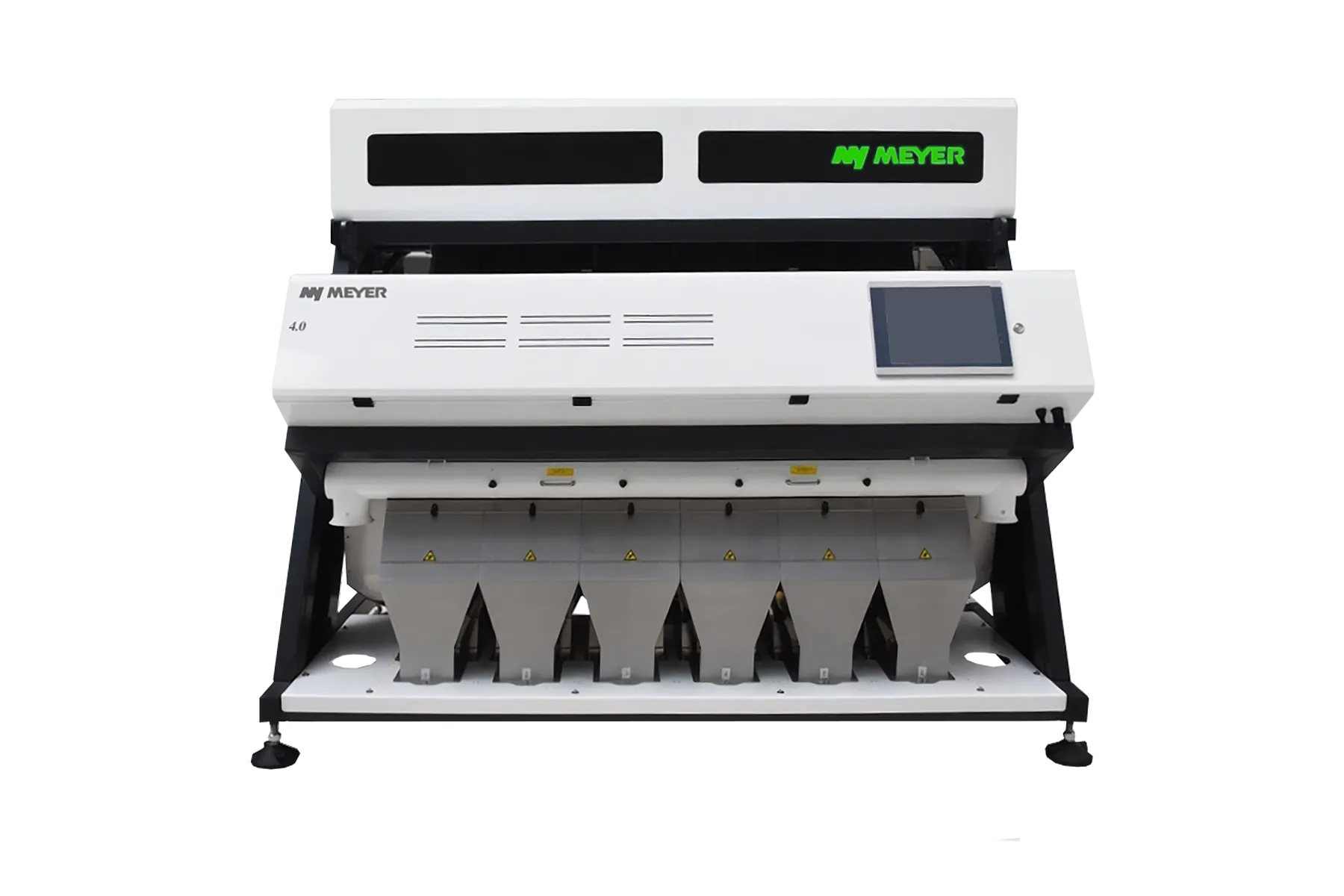
The Meyer SMART is the most popular Meyer model in Indian rice mills. Available in 5, 6, 7, 8, and 10 chute configurations, each chute delivers under 2.5 TPH. Features target positioning, shape sorting, Spectral Confocal 2.0, and flexible chute settings.
Best for: medium-to-large rice mills doing 2–10 TPH of rice output. Handles raw, steam, and parboiled rice equally well.
Same SMART chassis but with Meyer AI Deep Learning, Full Spectral Lighting, UHD imaging, and Maglev Ejector 3.0. Sorts rice, wheat, pulses, peanuts, soybean, sesame, cumin, chickpea, dehydrated onion, and garlic all on the same machine.
Best for: multi-commodity plants that process rice + dal + spices seasonally.
The MASTER 4.0 PL is Meyer's premium rice-only sorter. It features intelligent yield adjustment, AI-based digital control, uniform feeding, online quality monitoring, and remote equipment support. Reduces rework and manual intervention to almost zero.
Best for: modern rice mills that run 20+ hours a day and need lowest possible manual monitoring.
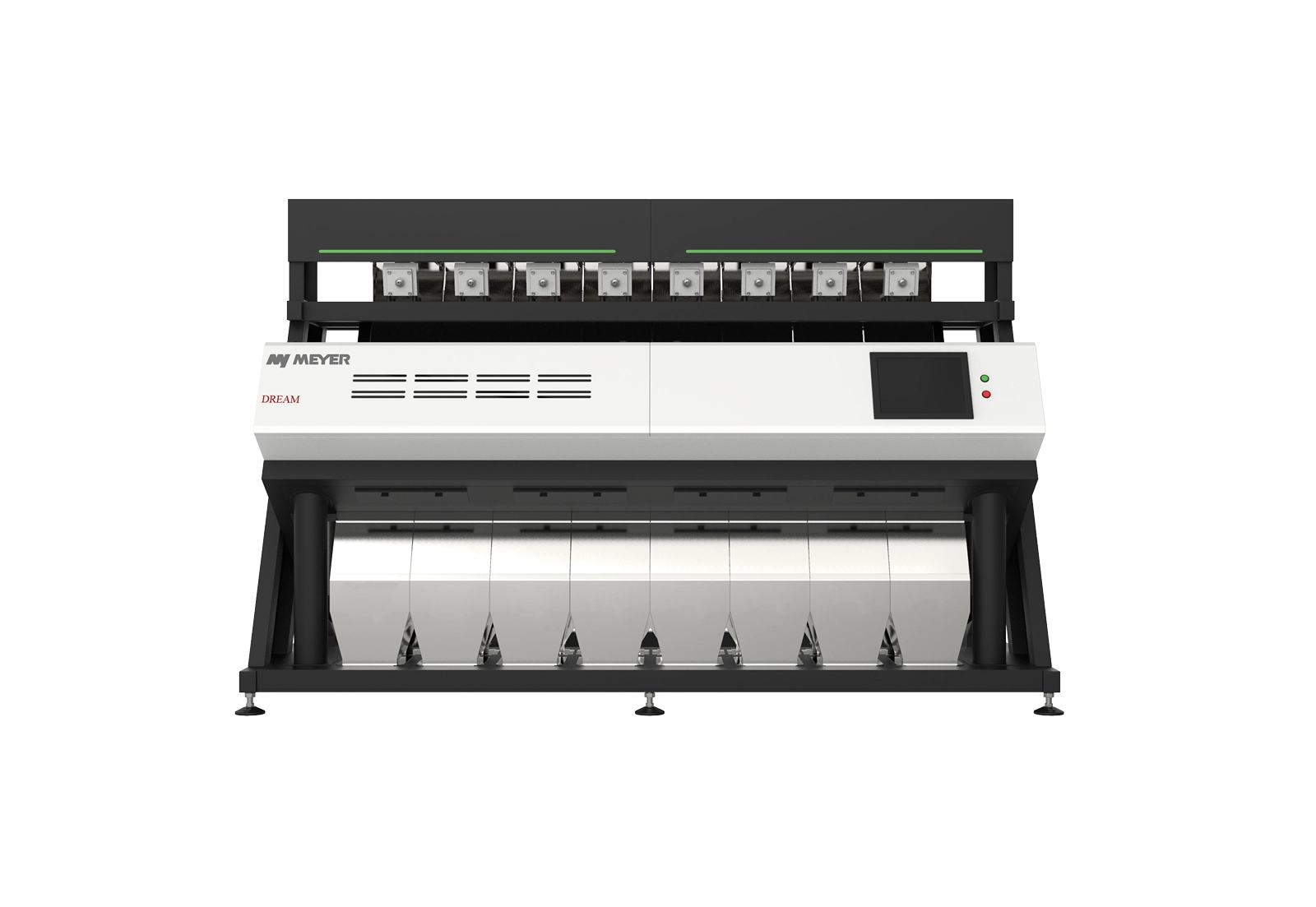
The Dream 4.0 UV combines UV sorting technology with AI Deep Learning. Available in 4 models (360 to 780 chutes) for small to very large basmati mills. UV detects even the faintest chalky, immature, and toxin-contaminated grains that RGB cameras miss.
Best for: basmati exporters and premium rice brands where every ppm of defect matters.
The CG.4.0 handles peanuts, rajma, chana, and other large-size commodities. Maglev Ejector fires up to 1,200 ejections per second. Also sorts by size, length, and shape — not just color.
Best for: rice mills that also run a dal or chana line.
Sortex Machine Price in India (Meyer Range)
Prices vary based on chute count, camera type (RGB, UHD, UV, InGaAs), and AI features. Rough range for reference — always ask NICPL for a live quote based on your commodity:
2-chute compact (M2-Series) — entry-level pricing, suitable for small mills
5–6 chute SMART — mid-range, most popular for Indian rice mills
7–8 chute SMART AI — premium mid-range with AI Deep Learning
Note: Chinese unbranded sortex machines are 40–60% cheaper but service, spare parts, and camera calibration are unreliable — a false economy for any mill running 15+ hours a day.
10-Point Buying Checklist Before You Order a Sortex
Rice output TPH — not paddy input. Calculate the actual milled rice per hour.
Service network — how many hours to a service engineer? Downtime cost = ₹15,000–50,000/hour for most mills.
Why Meyer Color Sorter from NICPL?
Meyer (Hefei Meyer Optoelectronic Technology) is a stock-listed company (code 002690) with 30+ years of rice sorting focus, over 500 material types sorted, and exports to 100+ countries. NICPL is the official authorized dealer for Meyer Color Sorters in India with:
20+ years serving Indian rice, dal, and grain mills
1000+ successful machine installations across India
5 offices with certified service engineers
Free trial centre at Kundli, Sonipat — bring your own paddy sample and see the sortex in action before buying
Genuine parts, factory warranty, and 24/7 breakdown support
AMC (Annual Maintenance Contracts) with guaranteed response times
Ready to Choose the Right Sortex for Your Mill?
Send us your rice output TPH, rice type (basmati / non-basmati / parboiled), and the top 2–3 defects you want to remove. Our team will recommend the exact Meyer model, chute configuration, and installation plan for your mill.